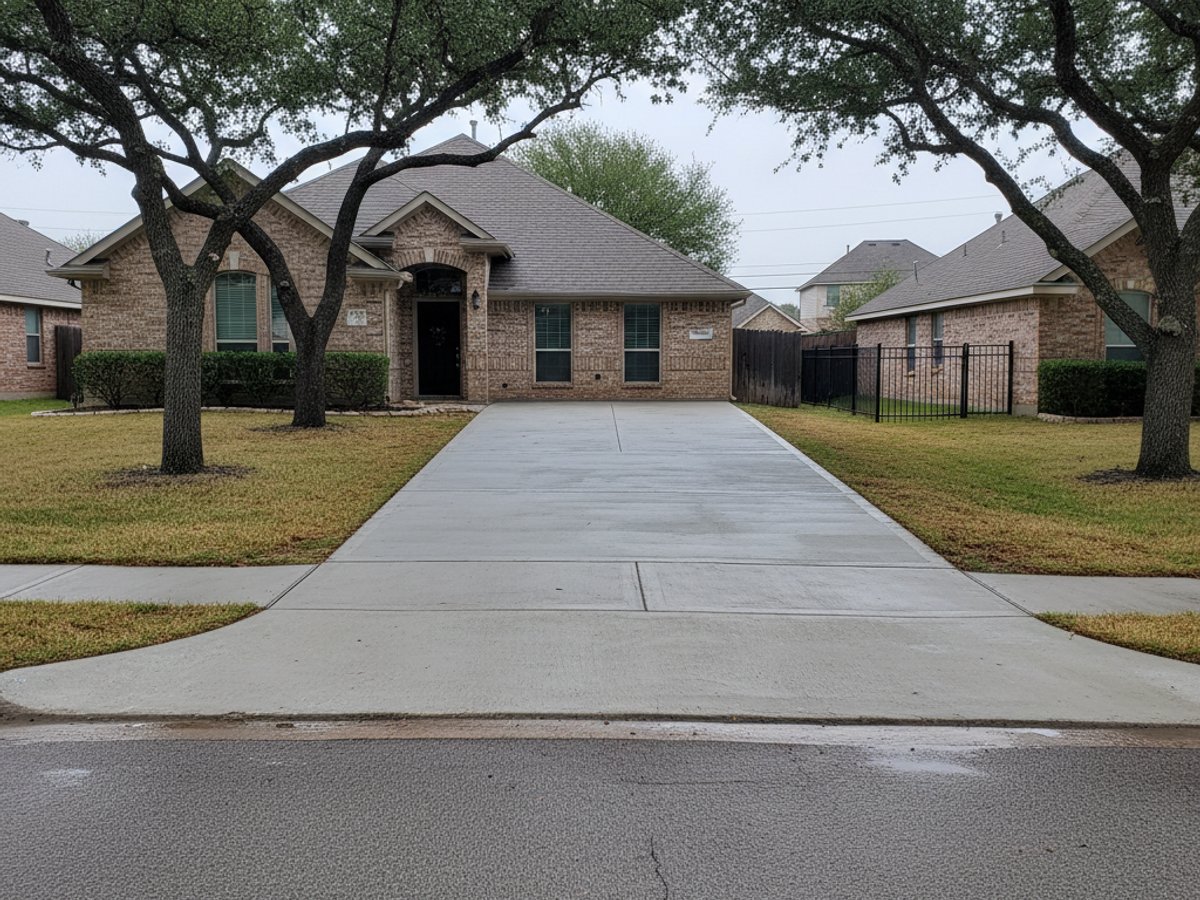
Concrete work looks simple from the driveway. Pour it, let it sit, drive on it. What separates a slab that lasts thirty years from one that cracks into pieces by year five happens before the truck ever shows up, and most homeowners never see that part. Here's what to actually look at when you're picking someone to do this work.
What's under the slab matters more than what's in it
San Angelo sits on ground that isn't forgiving. A lot of lots around here have caliche a foot or two down, that hard, chalky calcium layer that West Texas is known for. It doesn't compress like regular soil, and if a crew doesn't dig through it and re-compact a proper base, you get voids under the slab that show up as cracking a year or two later. Other spots, especially closer to the Concho River bottoms, have more clay content, which swells when it's wet and shrinks hard when it dries out. Either way, a good contractor tells you what they found when they excavated, not just that they "prepped the base." Ask what the base material is and how many inches of compacted road base or crushed limestone goes down before any concrete is placed. Four inches is typical for a patio or walkway. A driveway that'll see a truck or trailer needs more, and it needs to be compacted in lifts, not dumped in one pass and rolled once.
The bid should tell you the mix, the thickness, and how it's reinforced
A one-page quote that just says "driveway, $X" tells you nothing. A real bid names the concrete strength, usually 3,000 or 4,000 PSI around here, with 4,000 being the better call for driveways given our heat and the freeze-thaw swings we do get in January and February. It should say the slab thickness, 4 inches for patios and walkways, 5 to 6 for driveways that take vehicle weight. And it should say how it's reinforced. Wire mesh is cheaper and it's fine for a sidewalk. Rebar, typically number 3 or number 4 bar on a grid, holds up better under real load and resists the kind of cracking clay soil movement causes. If a contractor won't put any of this in writing, that's your answer before you've spent a dime.
Joint layout matters too. Concrete is going to crack somewhere, that's just what the material does as it cures and shrinks. Control joints, cut or tooled in at regular intervals, usually every 8 to 10 feet for a driveway slab, give the crack somewhere planned to happen instead of letting it wander wherever the slab decides. Saw-cutting those joints within the first 24 hours after the pour is standard practice. If nobody mentions joints at all, ask why.
Permits and inspections around here
Inside San Angelo city limits, most new driveways, slab foundations, and retaining walls over a certain height need a permit through the city's development services office, and that includes a setback check if the work is anywhere near a property line. Out in Tom Green County proper, the rules loosen up some, but a contractor who's worked here regularly knows the difference and won't guess. A licensed contractor pulls the permit themselves as part of the job and schedules the inspection, usually a base inspection before the pour and sometimes a final once it's cured. If a contractor tells you permits are optional or that you don't need one for a driveway replacement, check that yourself before you believe it. Some of the older neighborhoods near downtown and around Lake View don't have HOAs to deal with, but newer subdivisions on the south side often do, and those can have their own rules about driveway width or approved finishes. Worth a five-minute call to check before you sign anything.
What to walk away from
- A bid that's dramatically lower than everyone else's with no explanation. Concrete, rebar, and labor cost roughly what they cost. A number 30% under the field usually means thinner slab, no rebar, or a base that's just graded dirt with a couple inches of concrete on top.
- Anyone who wants full payment up front. A deposit before materials get ordered is normal. The full balance before the work is inspected and cured is not.
- No mention of curing time before you can drive on it. Concrete gains most of its strength in the first week but keeps curing for close to a month. Standard guidance is to stay off a new driveway with a vehicle for at least 7 days, and light foot traffic can usually happen after 24 to 48 hours. Someone who tells you it's fine to park on the next day either doesn't know or doesn't care.
- No physical address, no insurance certificate they'll actually hand you, and no photos of past work that aren't stock images.
- A crew that wants to pour on a day the forecast says 105 and windy. Concrete poured in extreme heat here in July and August can flash-cure on the surface before it sets properly underneath, leading to surface cracking and a weaker slab overall. A contractor who knows the local summer either pours early morning, uses a retarder in the mix, or pushes the schedule a day. That's not them being difficult, that's them protecting your slab.
Ask to see the work, not just hear about it
Photos are fine, but a contractor who's done work in your neighborhood or one nearby can usually drive you past it, or at least tell you the street. Older parts of town, the streets around Fort Concho or the original townsite, have decades-old concrete work sitting next to newer patches, and you can literally see which contractors' work held up and which didn't. That's a better reference than anything written down.
None of this is complicated once you know what to ask. Get the mix strength, the thickness, the reinforcement, and the base prep in writing, know who's pulling the permit, and don't let anyone rush a pour on a 100-degree afternoon. If you want someone local who'll walk through all of this with you before you sign anything, that's the kind of work we do at Midway Concrete.